

Academy
Structured Backgammon Education For Cognitive Growth
Mind Skillz Academy is the educational division of Mind Skillz, offering professional backgammon training through 1-on-1 coaching and group programs.
Our approach combines competitive excellence with structured cognitive development, helping students build focus, discipline, strategic thinking, and emotional resilience in a screen-free, engaging environment.
Coaching 1-On-1
Personalized Strategy Development tailored to each student’s level, learning style, and competitive goals.
Training focuses on:
- Positional strategy and board control
- Probability and risk assessment
- Match analysis and cube decisions
- Long-term planning and tactical awareness
- Mental discipline and emotional regulation
Ideal for students preparing for tournaments or seeking accelerated improvement.

Group Classes
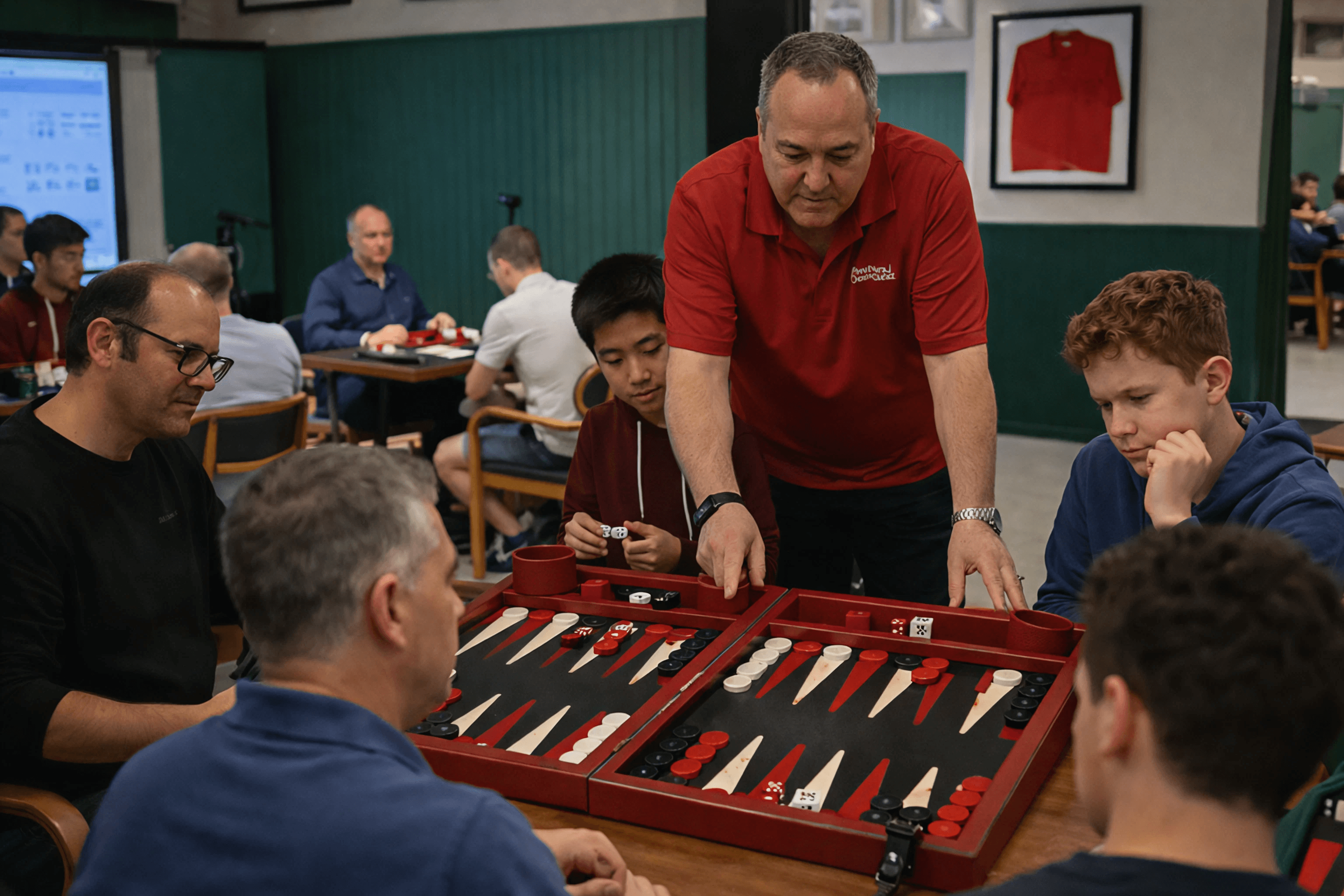
Group sessions are structured by age and skill level, encouraging healthy competition while reinforcing analytical thinking
Students develop:
- Strategic decision-making
- Pattern recognition
- Memory and concentration
- Confidence under pressure
Programs follow a structured progression path with measurable development.
School Partnerships
Our programs:
- Introduce strategic thinking early
- Enhance focus and discipline
- Encourage sportsmanship
- Support mathematical and analytical skills
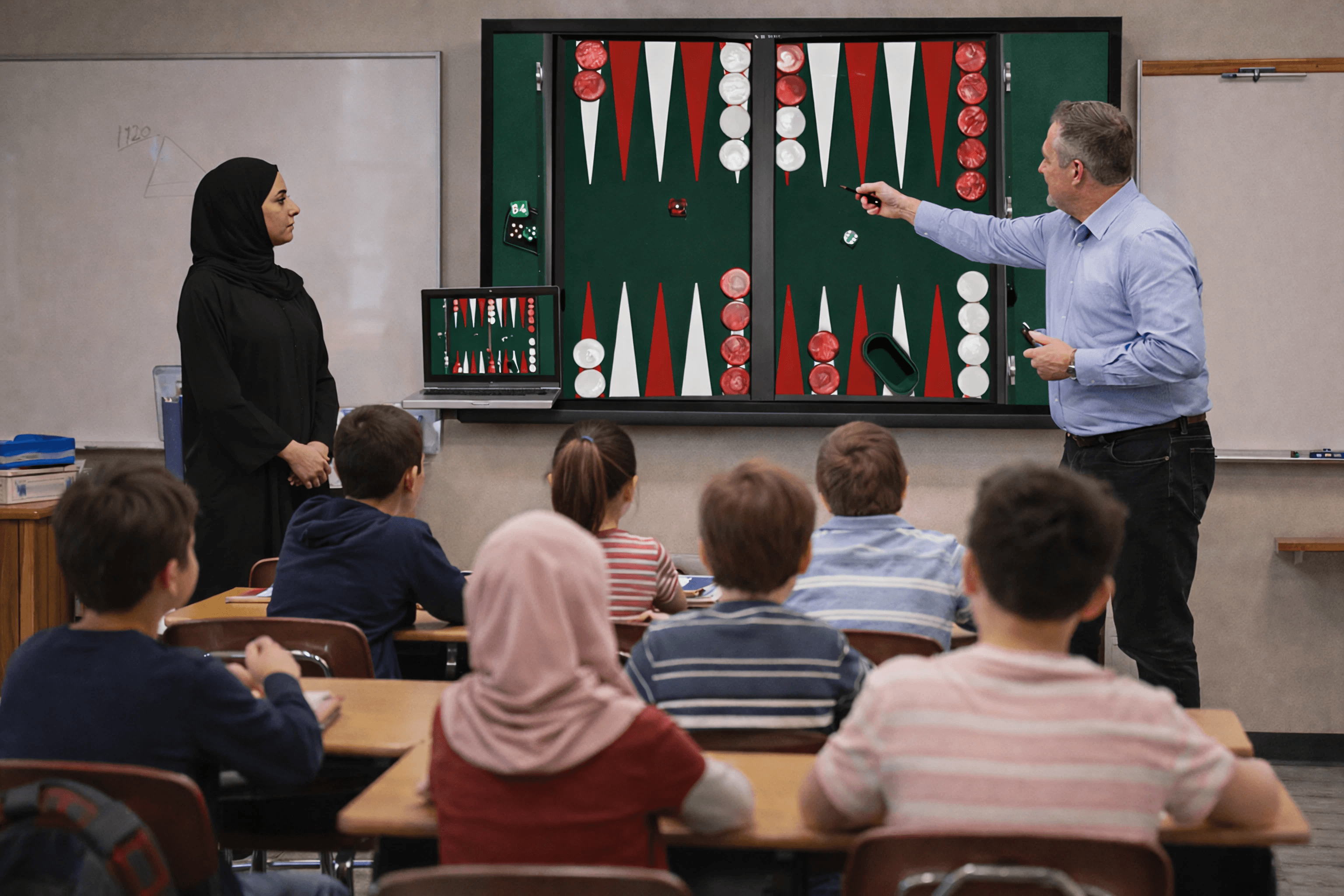
Includes workshops, tournaments, and instructor-led sessions.

Backgammon:Strategy Beyond the Dice
Backgammon is one of the oldest recorded board games in human history — a sophisticated blend of strategy, probability, psychology, and timing. While the roll of the dice introduces uncertainty, long-term success is determined by decision-making quality, risk management, and positional understanding.
At its highest level, backgammon is not a game of luck — it is a game of structured thinking under uncertainty. Whether you are playing socially or competing in tournaments, mastering core strategic principles transforms your performance.
10 Core Strategies to Elevate Your Game
Winning consistently requires more than reacting to dice rolls. Strong players understand board structure, probability, momentum shifts, and emotional control. The following foundations define high-level play.

Master The Opening Phase
The opening move sets the direction of the entire match. With only 15 possible non-double opening rolls, learning optimal opening responses provides an immediate statistical edge.
For example, certain rolls are best used to secure key points such as the 5-point or bar point — foundational positions that strengthen structure early.
Avoiding passive openings reduces unforced errors and improves long-term equity.

Recognize the Game State: Race vs. Contact
The opening move sets the direction of the entire match. With only 15 possible non-double opening rolls, learning optimal opening responses provides an immediate statistical edge.
• If you are ahead in pip count, your objective is to disengage safely and race home.
• If you are behind, you must maintain contact and create opportunities to hit. Racing when behind is mathematically losing.
Understanding this dynamic prevents strategic misalignment.

Understand Probability, The Rule Of 36
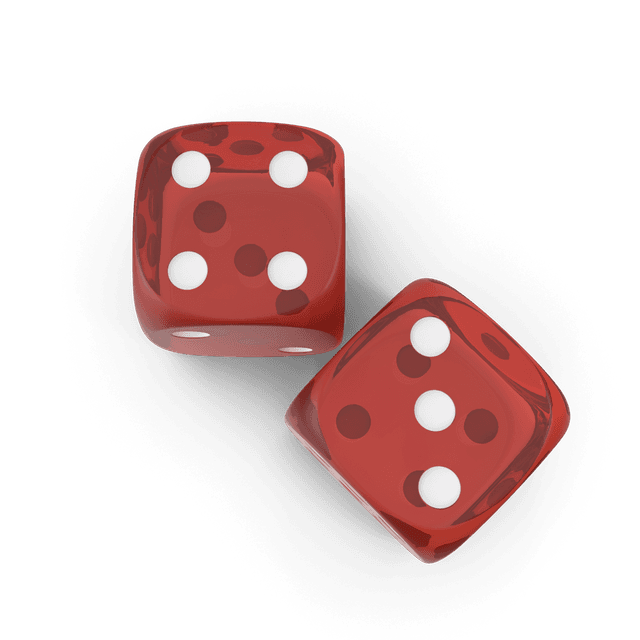
Every roll of two dice produces one of 36 possible outcomes. Strong players think in probabilities, not instincts.
For example:
Leaving a blot within six spaces of an opponent creates nearly a 47% chance of being hit. Small positional exposures compound over time.
You do not need advanced mathematics — but understanding roll frequency dramatically improves risk evaluation.

Build a Prime to Control Movement
A prime consists of consecutive made points that restrict opponent mobility. A 4-, 5-, or 6-point prime can completely immobilize opposing checkers.
Primes create long-term structural advantage and reduce volatility. Controlled positions outperform chaotic exchanges.

The Blitz Strategy — Controlled Aggression
TThe blitz is an aggressive tactic aimed at repeatedly hitting opponent checkers while building a strong home board.
When executed correctly, it prevents re-entry and creates gammon potential. However, blitzing without structure can expose your own weaknesses.
Aggression must be calculated — not emotional.

The Doubling Cube: Strategic Risk Management
Backgammon is also a game of equity management. The doubling cube introduces psychological pressure and mathematical precision.
Knowing when to double — when your advantage is strong but not yet certain — maximizes scoring potential. Doubling too late reduces gain; doubling too early risks reversal.
Professional-level play requires cube awareness at all times.

Establish Advanced Anchors
An anchor — especially on an opponent’s 4- or 5-point — provides defensive security and counterattack potential.
Anchors reduce gammon risk and maintain contact when behind. They create flexibility and prevent total collapse.
In difficult positions, anchoring is survival strategy.

Maintain Efficient Checker Distribution
Stacking too many checkers on one point limits mobility and future flexibility. Strong board distribution maximizes options and increases structural balance.
Flexibility in mid-game positions often determines who controls tempo.
Efficiency over clutter.

Bear Off With Precision
The endgame demands accuracy. If contact remains, safety matters. If it is a pure race, speed matters. Understanding when to clear points, when to avoid leaving blots, and how to minimize pip waste determines tight finishes.
Many games are lost in the final phase due to impatience.

Bear Off With Precision
Backgammon is as much psychological as it is technical. A focused environment improves performance. High-quality boards, proper dice control, and intentional gameplay create a shift from casual to competitive mindset. Respecting the game elevates decision-making clarity.